Best Open-Source Cloud Storage 2026: 6 Options Compared
Best open-source Cloud Storage compared: Nextcloud, Seafile, ownCloud, Pydio Cells and 2 more, with licenses, platforms and prices from official pages checked October 24, 2026.
•3 min read•Cloud Storage & Backup
Quick comparison
| Tool | Price | Platforms | Best for | Tested |
|---|---|---|---|---|
| Nextcloud | Free (Community server is free to self-host and the Nextcloud-branded desktop and mobile apps are free); paid from EUR 71.29 per user/year (Enterprise Standard at 100 users, 100-user minimum) | Web, Self-hosted, Desktop app, Mobile app | Teams that want a full suite | Docs only |
| Seafile | Free (Community Edition is free and open source; Professional Edition is free for up to 3 users); paid from $48 per user/year (Professional, 10-249 users) | Self-hosted, Windows, macOS, Linux, iOS, Android | Fast syncing of many files | Docs only |
| ownCloud | Free (ownCloud Core server code is open source under AGPL-3.0) | Web, Self-hosted | Existing ownCloud shops | Docs only |
| Pydio Cells | Free (Cells source code is open source under AGPL-3.0) | Web, Self-hosted | Organizations sharing with outsiders | Docs only |
| Syncthing | Free (Free; syncs directly between your own devices with no central server or hosted storage) | Windows, macOS, Linux, FreeBSD, Solaris, OpenBSD | Mirroring folders across your devices | Docs only |
| rclone | Free (Free open source software) | Windows, macOS, Linux, FreeBSD | Backups and migrations | Docs only |
Independent comparison. Paid placements are labelled separately; editorial links earn no affiliate commissions. Learn more.
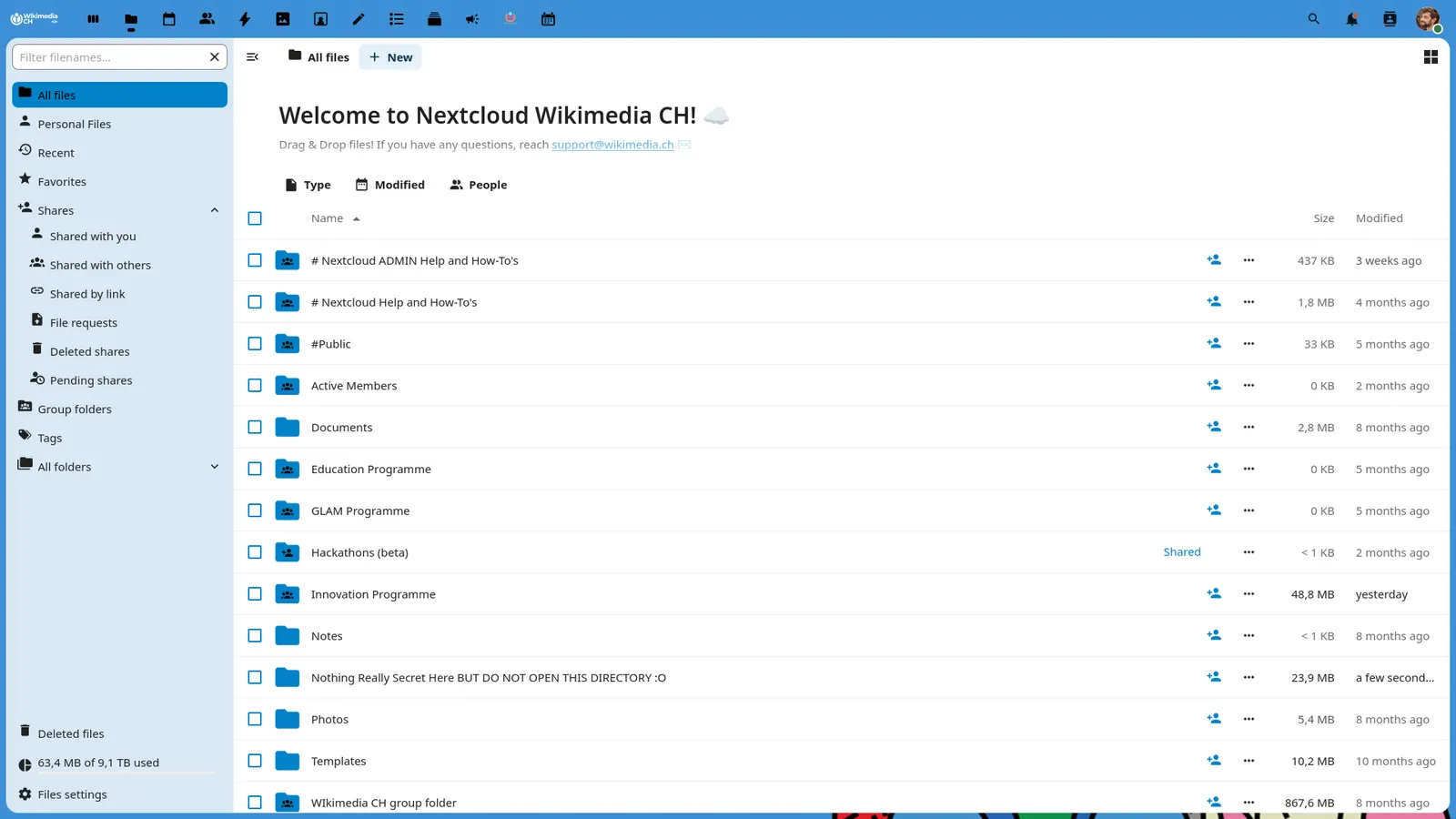
See the tools in action
Images from the linked documentation. Versions and features may differ from current plans.
Good fit if
- Your family or colleagues need accounts and a web page (Nextcloud is the pick)
- You sync a large photo or document library across your own devices (Syncthing is the pick)
- You want a fast file sync server and nothing else (Seafile is the pick)
- You need to back up a server to remote storage (rclone is the pick)
Not ideal if
- You cannot host, patch and back up a server yourself and want a vendor to run it
Open-source cloud storage means you run the storage yourself, on a home server, a rented VPS or a NAS, and you pick which of two styles you want. Server platforms such as Nextcloud, ownCloud, Seafile and Pydio Cells give you a web interface, desktop and phone apps, sharing links and user accounts, much like Dropbox but under your control. Sync tools such as Syncthing and rclone skip the web page: Syncthing copies folders directly between your own devices with no central server, and rclone moves files to and from many storage providers. Choose a platform if other people will log in, and a sync tool if you only need your own folders mirrored. Seafile has a reputation for fast file syncing, while Nextcloud trades some speed for a large app ecosystem, so match the tool to the amount of data. Remember the real cost is not the licence: you need backups of your backups, a domain with HTTPS, and a plan for disk failure, because nobody at a vendor is looking after your files. Licences and free limits here come from each project's own pages; community editions are free, while some vendors also sell supported editions.
Nextcloud
Largest ecosystem here: files, calendar, contacts and office apps in one AGPL-3.0 server. The community server and Nextcloud-branded apps are free; speed is not its strong point on big libraries.
Price: Free (Community server is free to self-host and the Nextcloud-branded desktop and mobile apps are free); paid from EUR 71.29 per user/year (Enterprise Standard at 100 users, 100-user minimum) (Nextcloud pricing, checked 2026-10-22).
Platforms and license: Web, Self-hosted, Desktop app, Mobile app. AGPL-3.0 (open source) (license source).
Project activity: 37.3k GitHub stars · latest release v33.0.10 (Oct 15, 2026) · last commit Oct 27, 2026
Best for: Teams that want a full suite.
Seafile
AGPL-3.0 server core with desktop clients under GPL-2.0. Community Edition is free; Professional is free for up to 3 users. Focused on file syncing rather than extra apps.
Price: Free (Community Edition is free and open source; Professional Edition is free for up to 3 users); paid from $48 per user/year (Professional, 10-249 users) (Seafile pricing, checked 2026-10-22).
Platforms and license: Self-hosted, Windows, macOS, Linux, iOS, Android. AGPL-3.0 (server core); GPL-2.0 desktop client (open source) (license source).
Project activity: 15.4k GitHub stars · latest release v9.0.5 (Feb 27, 2024) · last commit Oct 16, 2026
Best for: Fast syncing of many files.
ownCloud
The original ownCloud Core server under AGPL-3.0 with WebDAV, CalDAV and CardDAV. Paid editions exist but their prices were not checked for this guide.
Price: Free (ownCloud Core server code is open source under AGPL-3.0) (ownCloud pricing, checked 2026-10-24).
Platforms and license: Web, Self-hosted. AGPL-3.0 (open source) (license source).
Project activity: 8.8k GitHub stars · latest release v10.16.6 (Oct 6, 2026) · last commit Oct 27, 2026
Best for: Existing ownCloud shops.
Pydio Cells
AGPL-3.0 file sharing platform for organizations, rewritten in Go. Source is free; enterprise editions and prices were not checked.
Price: Free (Cells source code is open source under AGPL-3.0) (Pydio Cells pricing, checked 2026-10-24).
Platforms and license: Web, Self-hosted. AGPL-3.0 (open source) (license source).
Project activity: 2.3k GitHub stars · latest release v4.4.18 (Oct 6, 2026) · last commit Oct 27, 2026
Best for: Organizations sharing with outsiders.
Syncthing
MPL-2.0 sync tool that copies folders between your own devices with no central server or hosted storage. There is no web sharing link, so it is not a Dropbox replacement for guests.
Price: Free (Free; syncs directly between your own devices with no central server or hosted storage) (Syncthing pricing, checked 2026-10-22).
Platforms and license: Windows, macOS, Linux, FreeBSD, Solaris, OpenBSD. MPL-2.0 (open source) (license source).
Project activity: 89.8k GitHub stars · latest release v2.1.7 (Oct 21, 2026) · last commit Oct 27, 2026
Best for: Mirroring folders across your devices.
rclone
MIT command-line tool that copies and syncs files to many storage providers, handy for backing up a self-hosted server to cheap object storage.
Price: Free (Free open source software) (rclone pricing, checked 2026-10-22).
Platforms and license: Windows, macOS, Linux, FreeBSD. MIT (open source) (license source).
Project activity: 60.6k GitHub stars · latest release v1.75.2 (Oct 9, 2026) · last commit Oct 27, 2026
Best for: Backups and migrations.
Worth knowing: Command-line tool for over 70 cloud storage products; can mount storage as a disk and serve over SFTP, HTTP, WebDAV and FTP. Web GUI is experimental.
Which one to pick
- Your family or colleagues need accounts and a web page: Nextcloud
- You sync a large photo or document library across your own devices: Syncthing
- You want a fast file sync server and nothing else: Seafile
- You need to back up a server to remote storage: rclone
Limits of this review
Docs-only for Nextcloud, Seafile, ownCloud, Pydio Cells, Syncthing, rclone: we did not install or run them, so feature claims come from vendor pages. Vendor prices and free limits change; confirm on the linked pricing page before you commit.
Related guides
More in Cloud Storage & Backup
All Cloud Storage & Backup alternatives →Sources
Kevin Fan
Kevin Fan is a SaaS founder. He runs Free Instead Of, which tracks free and open-source alternatives to paid software and checks each price and free-plan limit against the vendor's own pages.
Methodology
Based on official pricing, license and product pages checked between 2026-10-22 and 2026-10-24: Nextcloud, Seafile, ownCloud, Pydio Cells, Syncthing, rclone. Prices, free limits and licenses are the figures shown on those pages on those dates. No tool on this page was installed or run. No accounts were created.